Automations
The repetitive part, done for you
You pick what sets it off and what steps follow. You build it by dragging boxes and joining them with a line, without writing a single line of code.
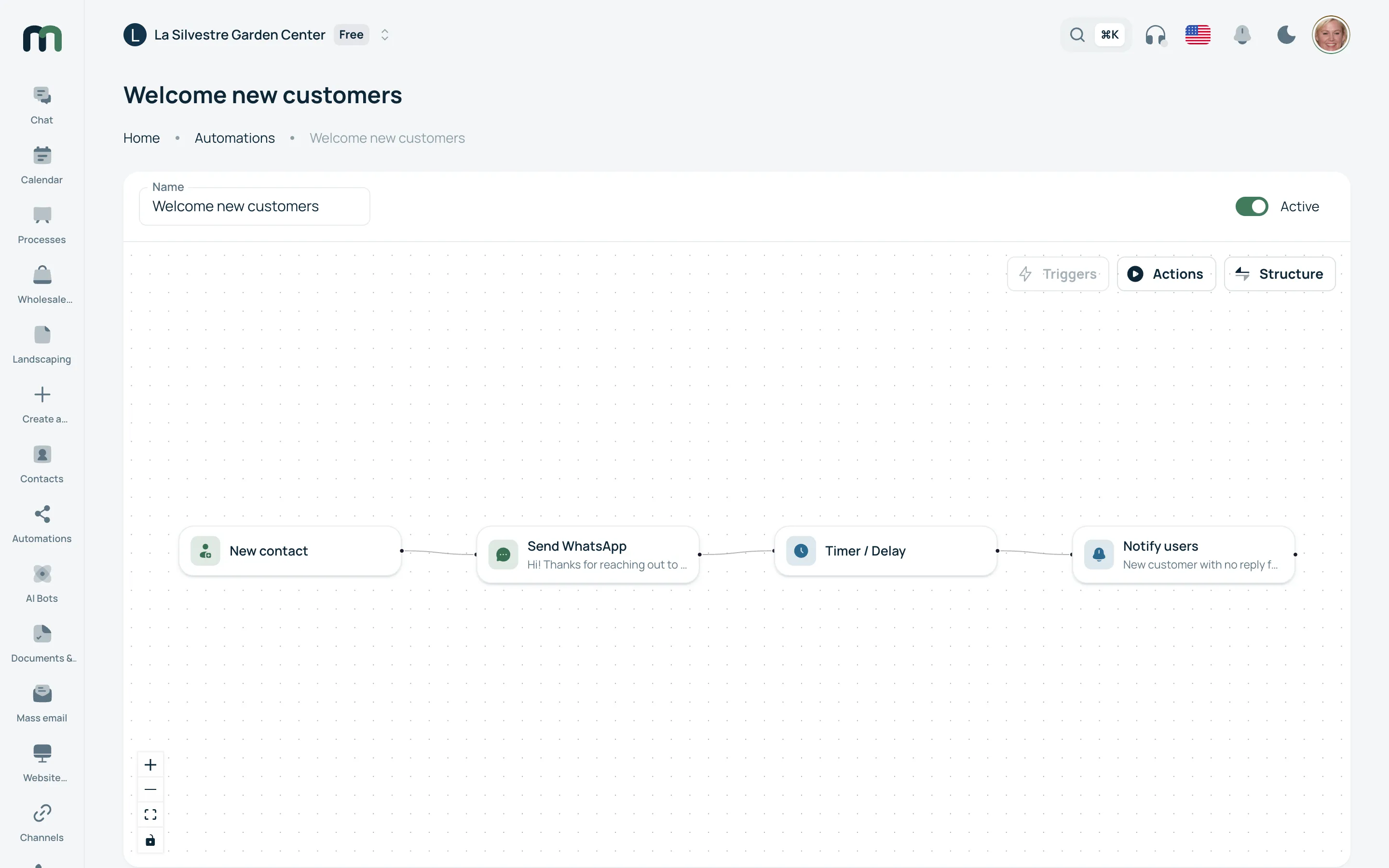
Automations
What changes
-
It starts from something that already happens
A new message, a submitted form, a card that changes stage, a date that arrives, a missed call. No need to invent an event: these are the ones that happen in your business every day.
-
The steps actually do things
Send a message or a template, move a card, assign the conversation to someone, add a tag, wait two days, or ask something and branch depending on the answer.
-
You see what ran and what failed
Every run is logged with its steps, and if something fails you see exactly at which step and why. An automation that works blind is one nobody dares to switch on.
What people usually ask
Do I need to know how to code?
No. You drag a trigger onto the canvas, hook steps to it, and test it before switching it on. If something is unclear, the test run shows what it would have done without sending anything to anyone.
What if the customer replies mid-sequence?
You can have the automation stop right there and hand the conversation to a person. It is the single most important rule: nothing is worse than keeping automated messages coming at someone who already replied.
Can I pause it without deleting it?
Yes, it toggles on and off, and whatever was already running is not lost. That is what to do in high season or when you are rewriting a message.