E-signatures
Documents signed without printing anything
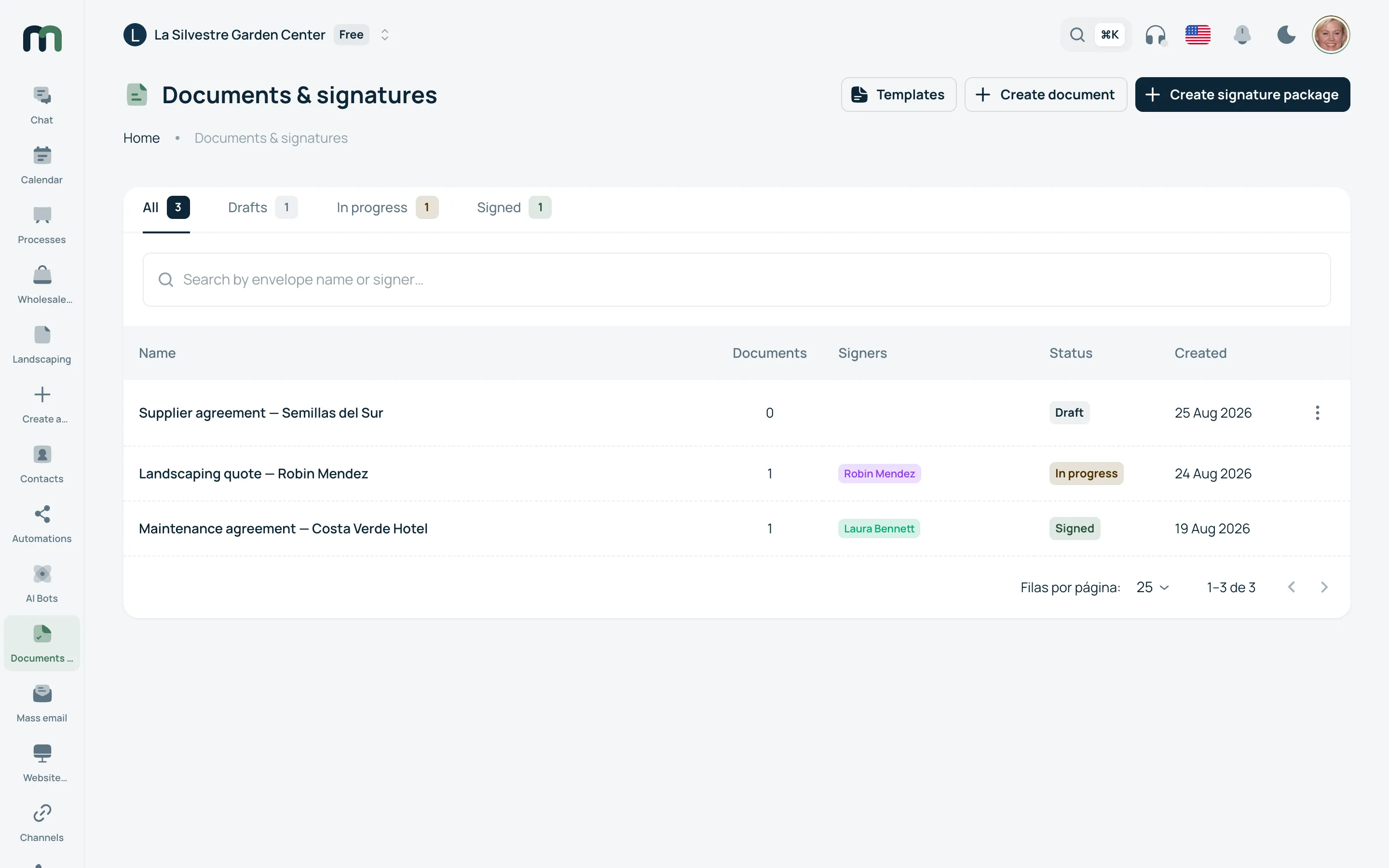
You upload the document, mark where each person signs, and send it on the channel where you already talk. The customer signs from their phone, with nothing to install and no account to create.
E-signatures
What changes
-
It goes out where you already talk
A quote sent over WhatsApp gets signed over WhatsApp. Nobody has to be told to check their email, dig through the spam folder, or sign up for a system they have never seen.
-
You see who is missing, live
With several signers, the status updates itself while you watch: who opened it, who signed, and who has not. You can nudge whoever is missing without redoing the whole send.
-
Everything leaves a trace
Every signature records when it was opened, from which address, which email or phone identified the signer, and a fingerprint of the file that proves nobody changed it afterwards.
What people usually ask
Is it legally valid?
It is a simple electronic signature with a record of who signed, when and from where — what most countries accept for contracts between private parties. For anything requiring a certified digital signature — deeds, powers of attorney, some public filings — it does not replace a notary or an official certificate. If your document is one of those, check first.
Does the signer need an account?
No. They open the link, read the document, sign, and that is it. The more steps there are, the more people drop out halfway: that is why there is no sign-up and no app to install.
Where does the signed document end up?
On the contact record, alongside the rest of their history, and every signer gets a copy. You download it whenever you want, with its audit record attached.